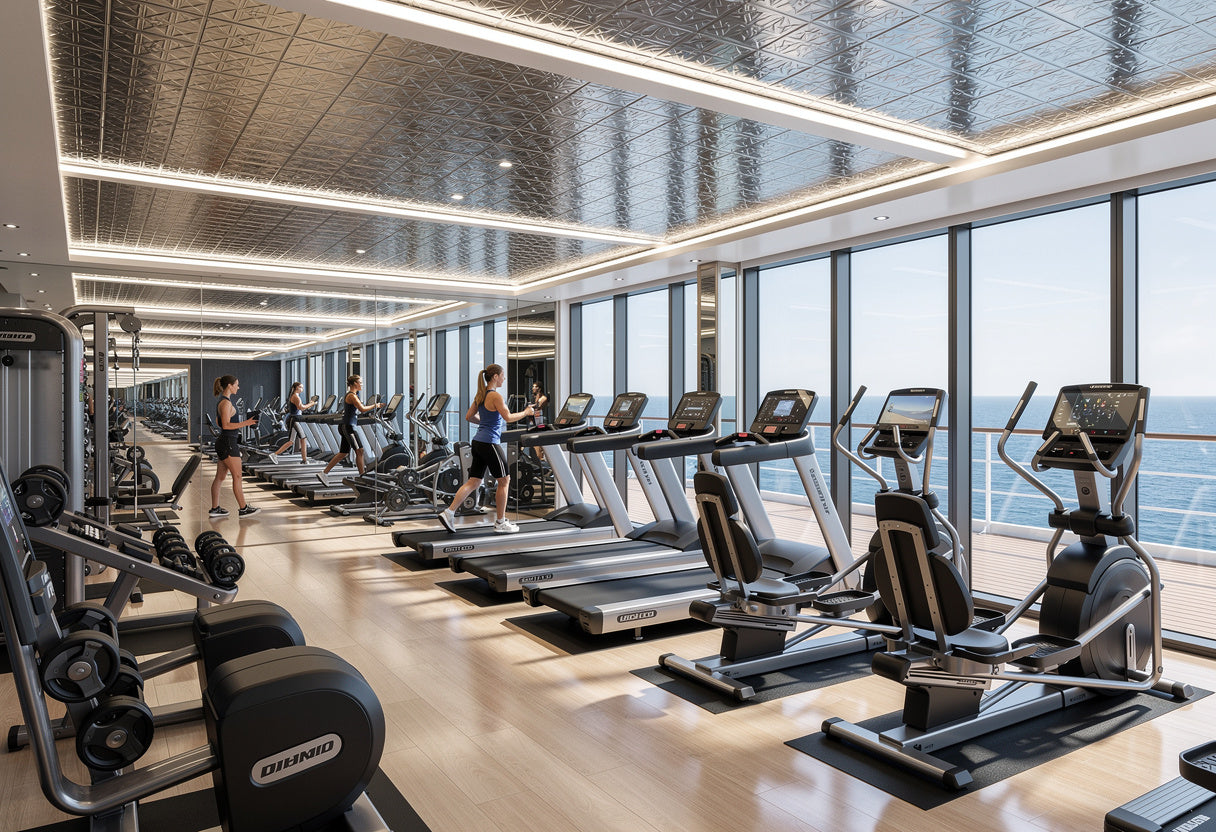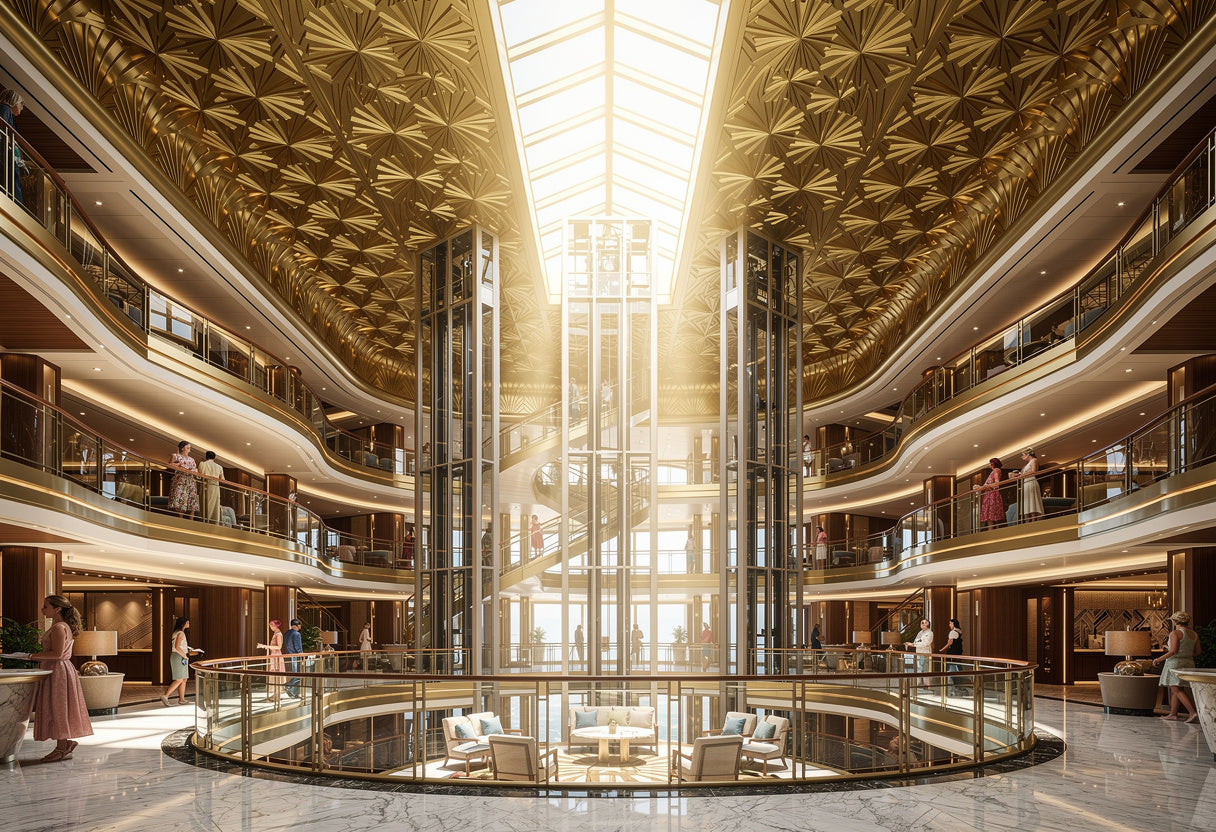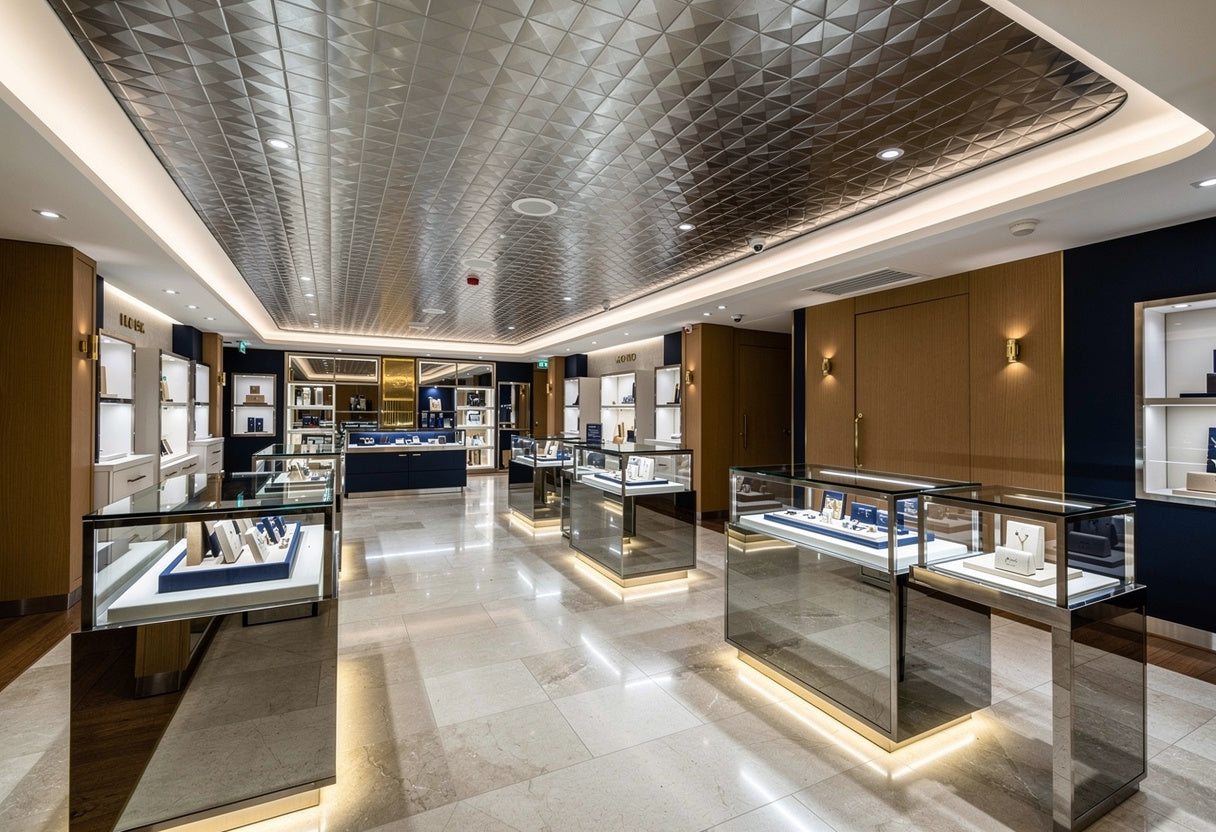
A ceiling panel isn't just a surface. On a ship, it's the bottom layer of a system that includes lighting, HVAC, sprinklers, and, in many cases, structural access requirements.


Getting the finish right means getting the integration right.


Specifying an architectural surface finish for a cruise ship interior is a different exercise than specifying one for a building. On a building, the ceiling is mostly the ceiling. On a ship, the ceiling plane is shared territory; lighting fixtures, air-handling, fire-suppression heads, and cable runs all penetrate or terminate at it. In refit situations, the ceiling must provide or preserve access to the systems behind it without requiring a full deconstruction each time work above it requires attention.


A finish supplier that doesn't understand this hands you panels and a packing list. What your outfitter team actually needs is a product that was designed with integration in mind; one that arrives ready to fit into the ceiling system your vessel already has, not one that creates a secondary engineering problem on the job site.


Shanko panels are designed for that integration.

Shipyard Packaging & Labeling

What arrives at a shipyard must be installable by the receiving team without significant interpretation. Panels that arrive without clear identification of pattern, orientation, finish, and installation sequence create job-site confusion and cost time. On a drydock schedule, time has a very specific daily cost.


Shanko panels ship with clear labeling that identifies each panel's position within the layout plan, finish specification, and installation sequence. Packaging is designed to protect finish integrity through shipping and yard storage, and to allow panels to be staged in installation order rather than requiring a full unpack and sort before work can begin.


For large-scale projects, we coordinate delivery sequencing with the outfitter team so panels arrive in the order they're needed, rather than all at once, reducing storage requirements for a yard already managing multiple material streams.

Drydock Scheduling Realities

A drydock window is one of the most expensive operating conditions a cruise line manages. The vessel is out of service, the yard is operating on a fixed schedule, and all trades are competing for time and access in the same spaces simultaneously. A finish supplier that doesn't understand this dynamic will cost your project time that is difficult to recover.


Shanko's delivery and coordination process is built around drydock realities. Lead times are discussed and confirmed during project planning. Documentation for shipyard receiving is prepared in advance. If the schedule shifts (as drydock schedules frequently do), we work with your coordination team to adjust without creating a supply gap that holds up the ceiling installation trade.


For refit projects specifically, we also account for the reality that existing ceiling conditions often differ from the drawings. When field conditions require layout adjustments, our coordination team is reachable and responsive; not a distant manufacturer that needs a formal change order process to answer a question.

For Newbuild Teams


On a new-build project, the ceiling finish specification is set early, and installation occurs within a fit-out sequence with its own internal logic. Shanko engages at the specification stage to ensure panel layouts are coordinated with the fit-out plan from the beginning, so the ceiling installation trade has everything it needs when its window opens.


CAD files for panel layouts, installation guides, and technical documentation are available to support the newbuild coordination process. We work with the outfitter's project management team, not around them. Contact us, and we will listen first, ask questions afterward, and deliver on your schedule.